Raised toilet seats: which one fits your toilet
A low toilet turns every visit into an unassisted deep squat, and knees give before pride does. A riser with handles converts that squat into a supported sit - which is why it's step four in the bathroom fix order. The catch is fit: these clamp onto porcelain that comes in two shapes, and the wrong shape rocks. One measurement sorts everything.
Elongated bowls. Padded handles, clamp-on, no legs on the floor to mop around.
Check price on Amazon (paid link)Round-bowl 3-inch seat with removable handles - the finish least likely to be vetoed.
Check price on Amazon (paid link)"Fits all toilets" and a clamp mechanism are physically incompatible promises.
Why fit fails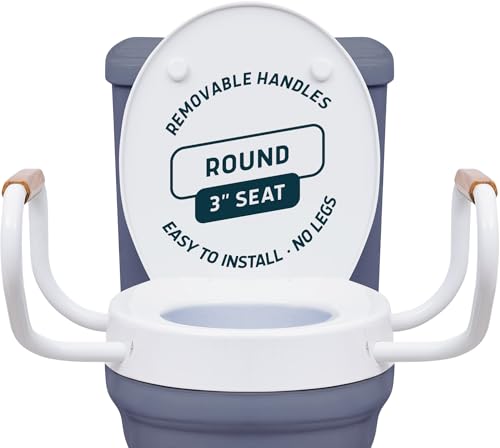

The numbers that decide it
| Bowl shape | Lift | Handles | Mount | |
|---|---|---|---|---|
| Vive Riser | elongated | 3.5 in | fixed, padded | rear bolt + front clamp |
| Lunderg Solva | round | 3 in | removable | clamp, no legs |
Lift and mount details from the manufacturers' spec sheets; confirm on the listing for the exact variant.
Will it fit your toilet?
The one measurement
Tape measure from the seat-bolt holes to the front rim of the bowl: about 16.5 inches is round, about 18.5 is elongated. That number picks your column in the table above, and it's not a preference - a seat for the wrong shape leaves a gap at the front or rocks on the sides. Skirted one-piece designer toilets are the second trap: some lack the under-rim geometry any clamp needs, and the listing's compatibility notes are the only honest source on that.
Rails, handles or a bar on the wall
Height is half the problem. The other half is what the hands do on the way down and the way up, and there are three different products for it, often confused with each other.
- A raised seat with handles built in. One item, one fitting job, and the handles rise and fall with the seat. This is the simplest answer when the person needs both height and something to push on, and it is what the seat above with arms gives you.
- A safety frame or toilet rails that stand on the floor. A separate frame that sits around the toilet on its own legs, usually adjustable in width and height, and independent of the seat. It suits a person who wants arms but not extra height, and its stability depends on your floor and the toilet footprint, so check both before ordering.
- A grab bar on the wall beside the toilet. Nothing stands on the floor, nothing changes the seat, and the hand has something fixed to structure. This is the strongest of the three when the wall allows it: which bar and where covers the choice, and the height guide has the numbers for a bar beside a toilet.
A note worth making, because it decides more of these purchases than any specification: a frame around the toilet is visible to every visitor, a wall bar reads as a fitting, and a raised seat is invisible until someone lifts the lid. When the objection is about how the bathroom will look to other people, that difference is the whole conversation.
Free-standing frame, height and width both adjustable, rated by the maker to 350 pounds. It fits around the toilet you already have: nothing is removed, nothing is drilled, and it comes out again when it is no longer needed.
Check price on Amazon (paid link)If they say they don't want one
This is the most private fixture in the house, and a big white medical riser announces itself. Two things that lower the temperature: the Solva's removable handles mean the "extra" parts vanish when guests come, and "comfort height" is what new toilets are sold as anyway - this is the retrofit version of a standard upgrade, not medical equipment. If the whole topic is a wall, the conversation pages exist for exactly this fixture.
Questions people actually ask
- How do I know if my toilet is round or elongated?
- Bolt holes to front rim: ~16.5 in is round, ~18.5 in is elongated. Wrong shape rocks - the most common reason these get returned.
- Do raised seats fit any toilet?
- No. Shape must match, and skirted one-piece designs sometimes lack the rim a clamp needs. Check compatibility notes against your measurement before ordering.
- How much height is right?
- Knees level with or slightly below hips when seated - for most recoveries, 3 to 4 inches. More is not better once feet lose the floor.
- Attached handles or separate rails?
- Attached for one user and recovery periods - one clamp, moves with the seat. Freestanding rails only when the bathroom is shared and the riser comes on and off.