Bed rails: which one matches the bed you own
The bed transfer happens twice a day in the dark, with blood pressure still waking up. A rail turns it from a free-standing balance test into a supported push-off. The class splits by how the rail meets the bed - under the mattress or standing on the floor - and your mattress, not your preference, makes that choice.
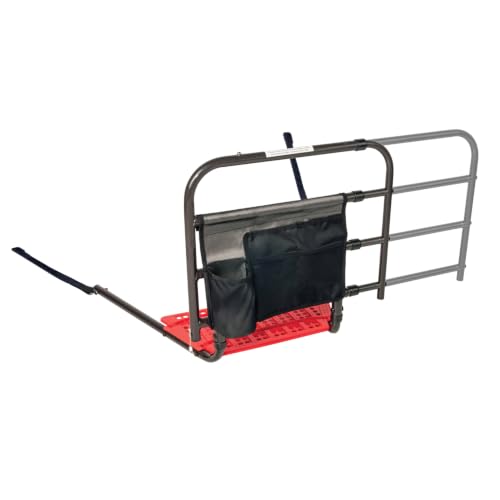
Under-mattress, extends to three widths, pouch included. The listing states an ASTM safety approval; the standard number is not published, so treat it as the maker's claim.
Check price on Amazon (paid link)Legs to the floor beside the bed - the answer when the mattress fights base plates.
Check price on Amazon (paid link)The handle lights itself when a hand approaches - the 2 a.m. detail that matters most.
Check price on Amazon (paid link)
The numbers that decide it
| Mounts by | Best for | Watch out | |
|---|---|---|---|
| Stander EZ Adjust | under-mattress plate + strap | standard mattresses, box springs, slats | thick soft memory foam |
| Panta | floor legs + frame strap | beds where plates swim; adjustable height | needs floor clearance beside bed |
| Lunderg motion light | under-mattress + strap | night use, dark hallway bedrooms | batteries are a maintenance item |
Ratings and dimensions from manufacturer spec sheets - confirm the exact variant on each listing.

Will it work with your bed?
The strap is the safety system
Every under-mattress rail ships with a strap that ties its base to the frame, and it's the part most people leave in the box. Skip it and a soft mattress lets the rail lean outward under load - a gap opens between rail and mattress, and a gap is the one failure mode this product class must never have. Strap on, gap closed, done in five minutes. Platform beds and adjustable bases that leave no room for a plate: that's the pole's territory.
For the caregiver down the hall
When the risk isn't the transfer but what happens after - wandering, or a person who won't call for help - a pressure-pad alert tells you they're up without a camera in the bedroom. The Smart Caregiver chair/bed alarm (paid link) pages you when weight leaves the pad; the CallToU pager (paid link) is the button version for someone who will press it. Neither has a subscription - you own the hardware, full stop.
Questions people actually ask
- Do bed rails work with a box spring and frame?
- Yes - the plate wants mattress weight on it, which box springs and slats provide. Thick soft memory foam is the enemy; the strap exists for exactly that case and is not optional.
- Are bed rails safe for someone with dementia?
- That's a question for their doctor, not a hardware site. A barrier can become a climbing risk for a person who doesn't remember it's there. Ask the clinical team first - this is where we stop at the spec sheet.
- Rail on the bed or pole beside it?
- Rail for the sit-and-pivot, pole for the stand-and-step. Low platform beds and adjustable bases are the classic pole case.